Part of what makes Major League Baseball (MLB) so appealing to its massive, ever-growing international fanbase is the game’s capacity to both reflect, and ultimately persevere through the trials and tribulations of an imperfect world. The game can provide an escape from the daily grind, but it is not immune to prolonged bouts of stubbornness, prejudices and, oftentimes, flat out bigotry from outside influences.
On the field, baseball is unforgiving, and if any weakness or liability exists among any of the 30 teams through the course of a six-month regular season, rest assured, scouting departments will find it and devise a plan for these weaknesses to be targeted.
It is a game of proud tradition, a vital capillary in the soul of American history, but just as extensive as its rich tales of triumph on the field are its periods of uncompromising rigor. At this moment, MLB and its players association (MLBPA) are at a crossroads on a number of key issues that are both difficult to convey and comprehend. Especially for the typical fan who just wants to sit in the bleachers with a dog and beer a couple of times each year between April and September.
Changes Coming Across MLB?
There are some key issues, that on the surface anyway, can be explained in laymen's terms. Items like a salary cap, which has continuously been shut down from the players’ union perspective. Or salary floor, a practical compromise that sounds great in theory but is difficult to imagine being practically applied.
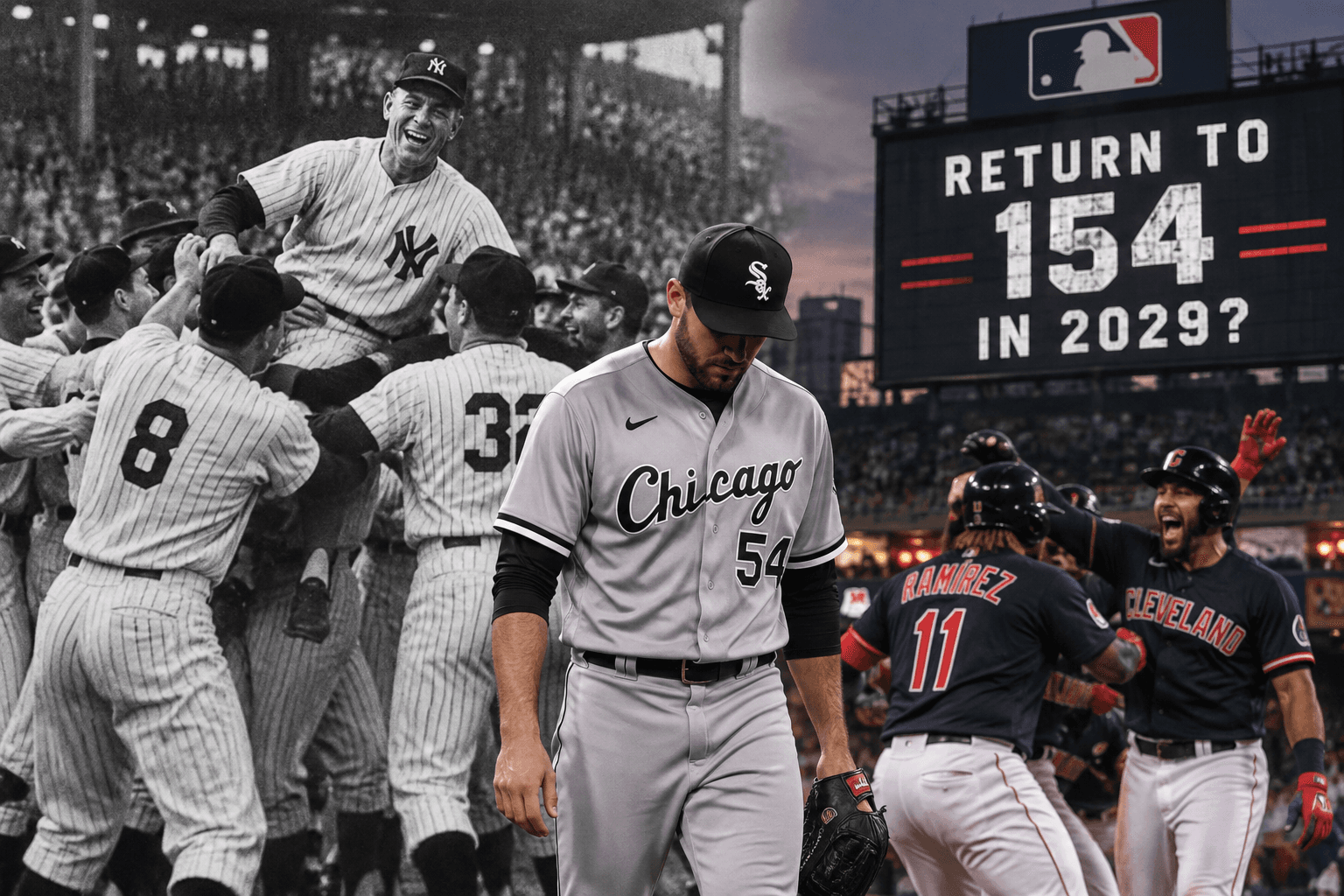
One item that appears to make sense now, in real time, is a return to the old 154-game, regular season schedule. The one that formerly existed across MLB from 1904 until 1960, before expansion prompted the American League to adopt the new, 162-game extended regular season in 1961, followed by the National League in 1962.
Now, more than six decades after the addition of eight more games to the MLB calendar, there are 30 teams, with talk of at least two more teams being added in the very near future, provided the two sides can come to some sort of agreement on their polarized agenda items this winter.
The game has adjusted to a substantial changes, new rules, and new systems over the years. For example, a mound reduction following the 1968 “Year of the Pitcher,” as if celebrating the success of Hall of Fame pitcher Bob Gibson of the Cardinals or 30 game winner Denny McLain was a bad thing.
Or the rollout of the designated hitter in 1973, which infuriated purists who felt that the pitcher had to hit in order to make the game whole. Fifty years later, fans are thankful for the careers of Hal McRae, Harold Baines, Edgar Martinez and now Yordan Alvarez. Players whose greatness in the art of hitting was brought to fruition through the assimilation of the DH into the everyday lineup.
Now, there are no striking differences between the two leagues. The DH is universal, with the National League permanently implementing it in 2022. Interleague play is commonplace and is no longer discussed as any major event. The Atlanta Braves playing the New York Yankees is now a regular season rivalry, and if they are ever to meet in the World Series again, there will no longer be any serious degree of unfamiliarity in terms of pitching matchups or hitters getting looks at opposing bullpen arms.
What’s strange becomes normal, and what’s old can become new again.
With that said, the time is now to shorten this marathon of a regular season. Case in point, Game Four in the American League Division Series in Cleveland ended with the Guardians rallying to score six runs in the sixth inning to even the series at two games apiece. The divisional playoff series now shifts to a Game Five finale on Saturday night. That’s Saturday, October 10, at Cleveland’s Progressive Field.
Looking back at the 1961 World Series, when strangely, only the American League had begun implementing the 162 game schedule, the World Series had officially concluded on October 9. The longer season didn’t appear to have any adverse impact on the Yankees that year, as they made quick work of the Cincinnati Reds with a lopsided 13 to 5 win at Crosley Field, officially capturing their 19th World Series title.
Preserving October Baseball
October was synonymous with the World Series for decades to come. From the Big Red Machine’s annual World Series appearances and further Yankee dominance in the 1970s courtesy of Reggie “Mr. October” Jackson, to Jack Buck’s famous call of a hobbling Kirk Gibson depositing a Dennis Eckersley offering deep into the Dodger Stadium bleachers, there are countless iconic October moments.
With the new playoff format, though, the World Series has extended into and ultimately finished in November. Most recently, in 2025, the dazzling, intense, edge of your seat thriller of Game Seven saw the Dodgers officially repeat as champions, just barely edging the Toronto Blue Jays. That series, like the current Division Series between the Guardians and the White Sox, is absolutely a war of attrition. Pitchers especially are completely spent, with relievers throwing in high leverage situations virtually every single game. Whichever team comes out of the divisional battle will be at a massive disadvantage heading into Tampa Bay for the ALCS, on one day’s rest against a Rays team that will have had five days of rest after defeating the Yankees in their divisional playoff round.
The playoffs have been thrilling, there is no question about that, but a move to a 154-game schedule can improve MLB in two areas that should be considered important. The playoff structure, in terms of having a Wild Card round, is not bound to change anytime soon, and rightfully so. With 40% of teams making the playoffs, there is added incentive for fans to show up and support their club. A ranking system might serve to improve the likelihood of the actual top 40% squaring off in October, but that is a topic for another day, and one that will also probably be raised in the winter meetings.
A 154 game schedule might give these pitchers an additional day or two to prepare for the war of attrition that the playoffs have indeed become over the past few years. It will also help to ensure that everything is wrapped up in October.
There is just something odd about hoisting the Stanley Cup in mid June, or presenting the Lombardi Trophy to the Super Bowl winning team in mid February, a full month after the Green Bay Packers first hoisted theirs in January of 1967. If MLB can fight to preserve its October heritage and the aura of playoff baseball in this beautiful fall month, then perhaps the other major sports will consider a slight return or shift to their traditional calendars.
Sharp takes. Every morning.
Get the day's top stories, line moves, and exclusive analysis.
Join sharp bettors getting daily insights. Unsubscribe anytime.
BOOST US IN GOOGLE
★ Get more Cover takes in your Google Search